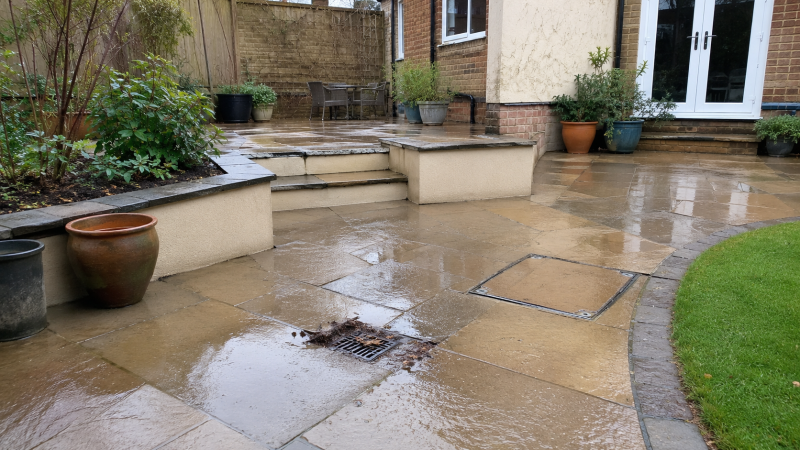
Kingston garden drainage problems can appear after landscaping, even when the finished work looks clean and well planned. A new patio, raised bed, garden path, decked area or planting scheme can change how water moves around the property. It can also hide drain covers, block gullies or make old pipe routes harder to reach.
Sometimes the drain problem starts soon after the work. In other cases, landscaping simply makes an existing weak point easier to notice. A slow outside drain, bad smell, gurgling toilet or water sitting near a new patio can all suggest that something has changed around the drainage layout.
Kingston upon Thames Drains24 helps homeowners, landlords and businesses with drain unblocking, CCTV drain surveys, drain repairs and emergency drainage problems across Kingston upon Thames and nearby areas.
Why garden landscaping can lead to Kingston garden drainage problems
Garden landscaping changes the ground around drains. A new patio may cover an inspection chamber. Raised beds may push soil against a wall or gully. New paving may send rainwater towards the house instead of away from it.
Those changes do not always damage the drain. However, they can block access, slow surface water, hide warning signs or expose older pipework problems.
This is why drainage needs attention when problems start after garden work. The issue may sit under the new surface, around a covered chamber, near a gully or further along the pipe run.
Common garden changes that affect drains
Many garden changes can affect drainage, especially where the old layout already had tight access or older pipe routes.
Common examples include:
- New patios laid around drain covers.
- Raised beds built close to walls or gullies.
- Decking installed over inspection chambers.
- Gravel or decorative stone covering small drain covers.
- New garden paths changing the flow of rainwater.
- Artificial grass hiding old gullies or access points.
- Planters, storage boxes or furniture blocking chamber covers.
- Garden rooms adding new waste pipes or rainwater routes.
- Soil level changes that trap water near the house.
- Landscaping debris entering gullies during the work.
A small change can create a bigger problem if the drain already has poor flow, root damage, silt or an awkward pipe route.
Warning signs of Kingston garden drainage problems
Drain issues after garden work often start with small signs. They may not look serious at first, but the timing can give an important clue.
Watch for:
- Water pooling on a new patio.
- A gully that fills and drains slowly.
- Bad smells near a newly landscaped area.
- A chamber cover that has become hard to find.
- A drain cover that no longer opens easily.
- Water sitting against an external wall.
- Gurgling from toilets, sinks, baths or showers.
- An outside drain blocking soon after landscaping.
- Soil or gravel washing into a gully.
- The same drain blocking more than once.
One warning sign may have a simple cause. However, several signs together can point to a drainage route, access or surface water problem.
Patios and poor water fall
A patio needs the right fall so water moves away from the property. If the surface slopes towards the wall, a door threshold, a gully or a low corner, water can sit where it should not.
This can lead to damp paving, moss, staining and slow drainage around the edge of the patio. It may also send extra water towards an old gully that cannot cope well.
Homebuilding guidance explains that patio drainage should either move water away with a suitable fall and discharge point, or collect it through suitable drainage channels.
Covered inspection chambers
Inspection chambers give engineers access to the drainage system. They help with drain checks, blockage clearing, CCTV surveys and repairs.
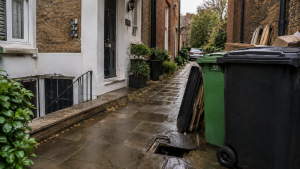
Garden work can make chamber covers harder to find. A cover may sit under decking, a planter, new paving, gravel, artificial grass or garden furniture. Sometimes the cover remains visible but no longer opens properly because the new surface sits too close around it.
When engineers cannot reach the right chamber, the job can take longer. It may also limit what they can check with a camera.
Gullies blocked by leaves, soil or gravel
Gullies often sit near downpipes, patios, kitchen waste pipes or garden edges. During landscaping, soil, sand, gravel, leaves and cement washout can enter these points if nobody protects them.
At first, water may still drain away. Over time, debris can collect inside the gully or pipe and slow the flow.
If a gully starts to smell, fill or overflow after landscaping, it may need clearing before the problem spreads further along the drain.
Raised beds and changed ground levels
Raised beds can look tidy, but they can also change how water moves through a garden. Soil may sit higher against a wall, channel water towards a path or hide low-level drainage points.
Changed ground levels can also make old covers harder to reach. In some cases, a gully that once sat clear may end up partly buried or surrounded by soil.
Good garden design should keep water moving away from the property and keep drainage access points easy to reach.
Garden rooms and new waste pipes
Garden rooms, outdoor kitchens and utility spaces can add new drainage demands. Some only need rainwater drainage, while others may involve waste pipes from sinks, toilets or appliances.
New waste connections need careful planning. If a new pipe has poor fall, awkward bends or a poor connection into the existing drain, waste can slow down and collect.
This article stays focused on garden landscaping, but garden rooms deserve a mention because they often change how homeowners use the outdoor space and drainage layout.
Private drains, shared drains and responsibility
Drain responsibility can matter when garden work affects a pipe. Thames Water explains that homeowners usually remain responsible for waste drainage pipes within their property boundary when those pipes serve only that property. It also says Thames Water owns the joint section when the drain joins with neighbours. Kingston Council also notes that drainage from private houses or land may fall either to the property or land owner, or to Thames Water, depending on the setup.
This matters in Kingston homes with shared gardens, side access, flats, converted houses or older terraces. A drain problem may appear in one garden, but the pipe may serve more than one property.
For legal responsibility, homeowners should speak with Thames Water, their solicitor, insurer or managing agent where needed. For the physical condition and route of accessible drains, a drainage check can help.
How CCTV surveys help after landscaping
A CCTV drain survey gives engineers a view inside the pipe. It can show where the drain runs and whether it has blockages, cracks, roots, silt, standing water or poor fall.
This helps after garden landscaping because the surface may no longer show the original drainage layout. A new patio may look neat while an old drain cover sits hidden below. A raised bed may hide a gully. A garden path may cross an older pipe route.
A CCTV drain survey can help confirm the pipe route and show whether the problem needs clearing, repair advice or better access.
When drain unblocking may solve the issue
Some post-landscaping drainage problems come from simple blockages. Leaves, soil, gravel, roots, grease or waste may sit inside a gully, chamber or pipe.
A drain unblocking visit can restore flow where the pipe has a clear blockage and no deeper fault. Engineers can also check whether water moves away properly once the blockage clears.
If the same drain blocks again, the pipe may need CCTV checks or repair advice.
When drain repairs may be needed
Drain repairs may become necessary when landscaping exposes or worsens an existing pipe fault. The issue may involve a damaged joint, broken chamber connection, cracked pipe, root entry or poor fall.
Repair warning signs include:
- The same drain blocking again after clearance.
- Standing water inside the pipe on camera footage.
- Cracked or broken pipework.
- Open joints catching waste.
- Roots entering through a weak point.
- A chamber damaged during landscaping.
- A pipe affected by heavy paving or changed ground levels.
- Water escaping into the surrounding ground.
Drain repairs should match the fault, access and pipe condition. A clear check helps avoid guesswork.
When the problem becomes urgent
Some garden drainage problems can wait for a planned check. Others need quick help, especially when foul water backs up or the home loses normal drainage.
Call for help quickly if:
- Wastewater backs up inside the property.
- An outside drain overflows with foul water.
- Several fittings stop draining at once.
- A chamber fills and does not empty.
- Strong drain smells appear after landscaping.
- Water sits against the house after drain use.
- The same drain blocks again soon after clearing.
- A gully overflows near doors or lower rooms.
For urgent problems, emergency drainage services can help restore flow and reduce further mess.
What homeowners can check safely
Homeowners can make simple checks before calling for drainage help. These checks can help explain what changed after the garden work.
- Check whether the issue started after landscaping.
- Look for drain covers near the new patio or beds.
- Check whether furniture, planters or storage block access.
- Watch where rainwater pools after wet weather.
- Look for gullies blocked with leaves, soil or gravel.
- Ask the landscaper where drains and chambers sit.
- Keep photos or plans from the garden work.
- Avoid flushing wipes, grease or heavy paper if drains struggle.
Do not lift heavy or damaged covers if they look unsafe. Also avoid strong chemicals where dirty water has backed up, as they may not solve the main cause.
How to reduce drainage problems during future landscaping
Good planning can reduce many avoidable drainage problems. Before garden work starts, homeowners should find drain covers, gullies and known pipe routes.
- Keep inspection chambers easy to reach.
- Do not build fixed decking over drain covers.
- Protect gullies from soil, sand and cement washout.
- Plan patio fall so water moves away from the house.
- Keep surface water routes clear.
- Avoid placing heavy fixed items over known pipe runs.
- Ask about drainage before installing raised beds.
- Consider a CCTV check if the drain route looks unclear.
These steps help protect the drainage system and make future checks easier.
Get Kingston garden drainage problems checked after landscaping
Kingston garden drainage problems after landscaping can come from covered chambers, blocked gullies, poor patio fall, changed ground levels, hidden pipe routes or older drains that no longer cope well. A garden may look finished, but the drainage below still needs clear access and good flow.
Kingston upon Thames Drains24 can help with drain unblocking, CCTV drain surveys, drain repairs and emergency drainage problems across Kingston upon Thames.
If drains start smelling, blocking, gurgling or holding water after garden work, it is worth checking the pipe route and access before the issue becomes harder to deal with.
FAQs
Can garden landscaping cause drain problems?
Yes. Garden landscaping can cover inspection chambers, block gullies, change ground levels, send water towards the house or hide older pipe routes.
Why is water pooling on my new patio?
Water may pool on a new patio if the surface has poor fall, a blocked gully, no clear discharge point or drainage channels that cannot cope with the flow.
Should inspection chambers stay accessible after landscaping?
Yes. Inspection chambers should stay easy to reach so engineers can clear blockages, check flow, carry out CCTV surveys and plan repairs where needed.
Can a CCTV survey help after garden work?
Yes. A CCTV survey can help show pipe routes, blockages, cracks, roots, silt, standing water and access issues after garden landscaping.
Can Kingston upon Thames Drains24 help with garden drainage problems?
Yes. Kingston upon Thames Drains24 can help check drain problems after patios, raised beds, decking, garden rooms and other landscaping changes.