Drain interceptor trap problems in Kingston upon Thames still affect many older properties. These traps were originally installed to prevent sewer gases entering homes. However, modern systems no longer require them, and they now cause more harm than benefit.
At Drains24, we regularly identify drain interceptor trap problems in Kingston upon Thames during CCTV inspections. In most cases, clearing alone does not solve the underlying restriction.
What is a drain interceptor trap?
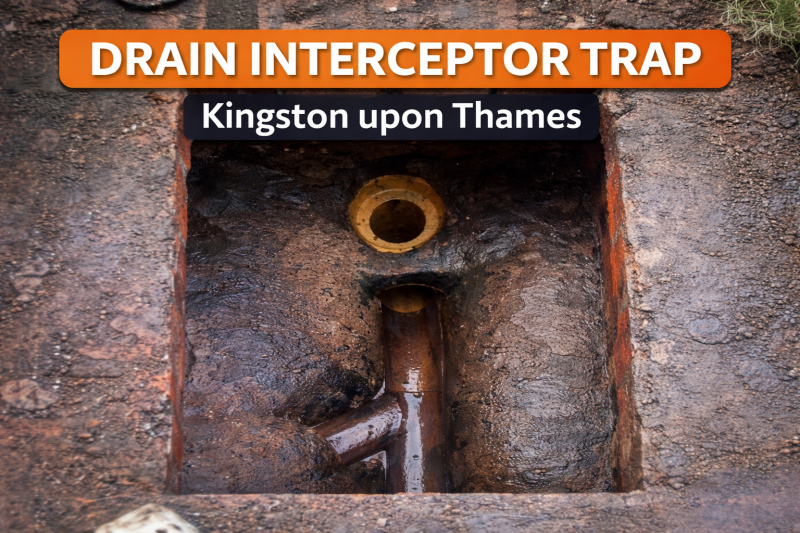
A drain interceptor trap is a chamber built into older drainage systems, usually located just before the connection to the public sewer. It contains a water seal and a curved channel designed to block foul air from travelling back into the property.
While effective decades ago, modern sewer systems no longer require this design, and the structure itself can create flow restrictions.
Why drain interceptor trap problems in Kingston upon Thames occur
Older homes across Kingston still rely on original underground drainage layouts. As a result, interceptor traps often restrict flow over time.
Specifically, they can:
- Collect debris at the curved bend
- Slow wastewater discharge
- Trap solids behind the water seal
- Deteriorate due to age and ground movement
Consequently, homeowners experience repeat blockages even after professional clearing.
Signs of interceptor trap restriction
You may be dealing with drain interceptor trap problems in Kingston upon Thames if you notice:
- Recurrent blockages in multiple fixtures
- Slow-draining toilets or sinks
- Gurgling pipework sounds
- Foul smells near inspection chambers
- Issues returning weeks after unblocking
In many cases, standard drain unblocking in Kingston upon Thames provides temporary relief, but the structural restriction remains.
How interceptor traps are diagnosed
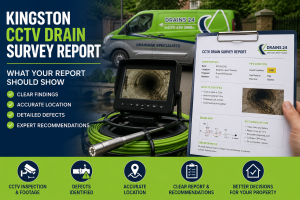
A professional CCTV drain inspection allows specialists to trace pipe flow and identify whether an interceptor trap is restricting discharge.
During inspection, specialists often find:
- Standing water behind the bend
- Debris trapped at the base
- Structural wear or cracking
- Reduced discharge speed
Where necessary, drain repairs in Kingston upon Thames may involve modification or removal of the interceptor trap to restore full pipe flow.
For regulatory background, drainage standards are outlined in Approved Document H of the Building Regulations, which governs drainage design and sewer connections.
Why removal is sometimes recommended
Modern drainage systems use alternative venting methods, meaning interceptor traps are often redundant. Removing or modifying them can:
- Improve flow efficiency
- Reduce recurring blockages
- Eliminate debris collection points
- Future-proof older drainage layouts
Every system is different, so inspection determines the safest approach.
Summary
Drain interceptor trap problems in Kingston upon Thames remain a hidden cause of recurring drainage faults in older homes. While clearing can relieve symptoms, structural inspection is essential to identify whether the interceptor trap itself is restricting proper flow.
FAQs
What is a drain interceptor trap?
A drain interceptor trap is an older drainage component designed to block sewer gases from entering a property using a built-in water seal.
Why do interceptor traps cause blockages?
Their curved internal design slows wastewater flow and can collect debris, leading to recurring restrictions.
Are interceptor traps still required?
Modern drainage systems typically do not require them, but their removal depends on pipe layout and regulations.
How are interceptor trap problems diagnosed?
A CCTV drain inspection identifies internal buildup, structural wear and flow restriction within the trap chamber.
Can interceptor traps be removed safely?
Yes, in many cases they can be modified or removed to improve drainage performance, subject to inspection findings.