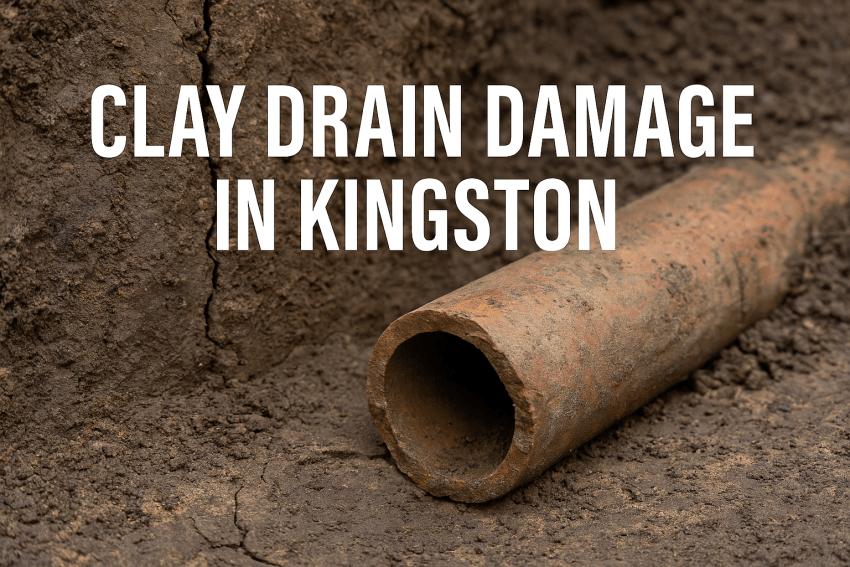
Many older properties in Kingston upon Thames still rely on original clay drainage pipes. While these pipes were durable in their time, they are now more vulnerable to cracking, shifting and collapsing — especially as ground conditions change.
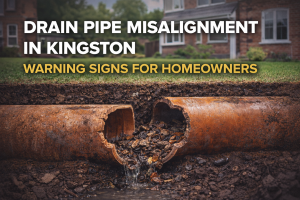
Even minor ground movement can cause clay pipes to misalign, allowing leaks, root intrusion, or partial collapses that restrict wastewater flow.
In this guide, we explain why clay drains fail, the common warning signs, and why many Kingston homeowners don’t realise they have a problem until significant damage has already occurred.
Why Clay Drains Are Still Common in Kingston
Large areas of Kingston feature Victorian, Edwardian and mid-century homes that originally used clay pipes for drainage. These were strong and long-lasting, but the materials are rigid and unable to flex with soil movement.
As a result, when the ground shifts — even slightly — clay pipes crack instead of bending. This is a major cause of drainage failures in older Kingston neighbourhoods such as Surbiton, Norbiton and Berrylands.
How Ground Movement Affects Clay Drains
1. Soil Shrinkage and Expansion
Clay-based soils shrink during dry weather and expand when saturated. This movement puts stress on older clay drainage pipes, causing fractures or displaced joints.
2. Nearby Construction Work
Extensions, excavations or heavy equipment can disturb the soil supporting the drainage system, increasing the risk of pipe collapse.
3. Tree Root Activity
Kingston is full of tree-lined streets. Mature roots follow moisture, entering small cracks in clay pipes and widening them over time. This leads to blockages, misalignment and structural failure.
4. Natural Settlement
Older homes often settle over decades, putting uneven pressure on underground pipework.
5. Water Pressure Changes
If pipe sections become partially blocked, water pressure can force joints apart, especially in fragile clay systems.
Warning Signs of Clay Drain Damage
1. Slow or Inconsistent Drainage
Water may drain slowly from sinks, baths or showers due to narrowed or collapsed pipe sections.
2. Repeated Blockages
If the same drains keep blocking, the issue may be due to structural failure rather than waste build-up.
3. Gurgling or Strange Noises
Misaligned pipes trap air pockets that create gurgling sounds.
4. Localised Wet Patches in the Garden
A leaking clay pipe can saturate surrounding soil, leaving damp areas or fungal growth.
5. Smell of Sewage Outdoors
Cracks or displaced joints often let odours escape to the surface.
6. Subsidence or Cracks in Hard Surfaces
If drainage water escapes underground, it can wash away soil and destabilise driveways or patios.
Why This Is a Common Issue in Kingston
The combination of older housing stock, heavy clay soils and mature trees makes Kingston particularly prone to clay drain problems. Homes close to the River Thames also see fluctuating soil moisture levels, which increases movement.
How Professionals Diagnose Clay Drain Problems
Specialist drainage engineers use:
1. CCTV Drain Surveys
A camera is inserted into the pipe to assess cracks, displaced joints and root intrusion.
2. Dye or Pressure Testing
Useful for identifying hidden leaks or joint failures.
3. Sonar Tracing and Mapping
Helps determine the drain route and pinpoint damaged sections.
Repair Options for Clay Drain Damage
1. High-Pressure Jetting (for root removal)
Clears debris and roots before further repairs.
2. Localised Patch Lining
A resin patch is installed to seal cracked sections.
3. Full Pipe Relining (CIPP)
Creates a new pipe within the old one without excavation — one of the most effective solutions.
4. Excavation and Pipe Replacement
Used when the pipe has fully collapsed or is too damaged for lining.
Preventing Clay Drain Damage in Future
- Avoid planting large trees near underground drainage
- Inspect drains after nearby construction work
- Arrange periodic CCTV surveys on older homes
- Fix small blockages early before pressure builds
- Repair displaced joints as soon as they appear
Local Insight for Kingston Homeowners
Because so many homes in Kingston still rely on clay drains, early detection is key. A single crack can allow water to escape, attracting roots and weakening the pipe further.
Ignoring early warning signs can lead to fully collapsed drains — and much higher repair costs.
FAQs About Clay Drain Damage in Kingston
Q1: How long do clay drains last?
Clay pipes can last several decades but become more fragile with age, especially in areas with heavy clay soil or tree roots.
Q2: Are clay drains expensive to repair?
Costs depend on the damage. Patch lining is affordable, while collapsed sections may require excavation.
Q3: Can tree roots break clay pipes?
Yes — once roots enter cracks, they expand inside the pipe and worsen structural damage.
Q4: Is relining better than replacing clay drains?
Relining is often cheaper and avoids digging up gardens or driveways. Replacement is only needed for severe collapses.
Q5: How do I know if the damage is serious?
A CCTV survey is the only reliable way to diagnose the extent of clay pipe damage.