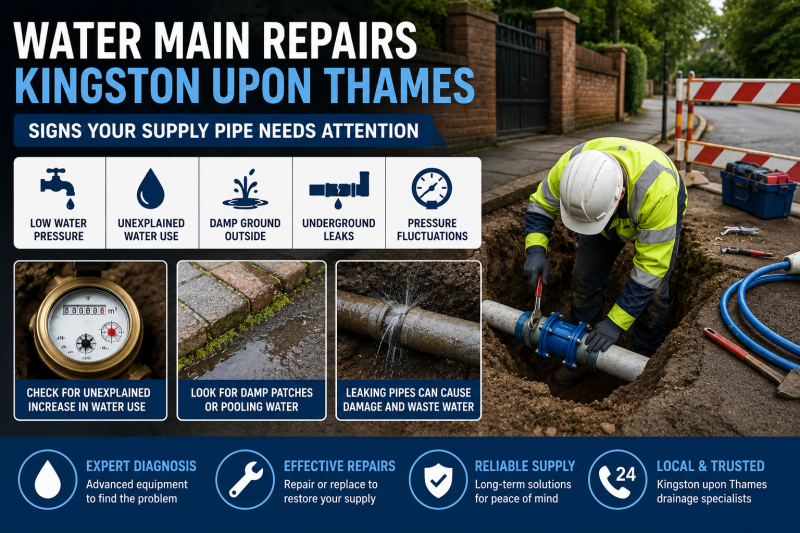
Water main repairs Kingston upon Thames property owners need can start with small warning signs. A drop in water pressure, damp ground, an unexplained increase in water use or water appearing where it should not can all point to a problem with the underground supply pipe.
Because supply pipes usually run below ground, leaks and damage are not always obvious at first. In some cases, the issue only becomes clear when water pressure changes, the ground stays wet, or the supply becomes unreliable.
Kingston upon Thames Drains24 helps homeowners, landlords and businesses with water main repairs, water pipe installation, drainage investigation and related underground pipework services across Kingston upon Thames and nearby areas.
Why water main repairs Kingston upon Thames properties need should not be delayed
A damaged water supply pipe can waste water, affect pressure and cause ground problems around the property. If the leak sits underground, water may keep escaping before anyone notices the scale of the issue.
Over time, escaping water can soften the ground, affect paved areas, wash out soil or create damp patches that keep returning. In some cases, the problem may also affect the reliability of the supply into the property.
When warning signs appear, water main repairs Kingston upon Thames services can help identify the problem and plan the right repair or replacement approach.
Common signs of a damaged water supply pipe
Water supply pipe problems can show in several ways. Some signs appear inside the property, while others show outside along the pipe route.
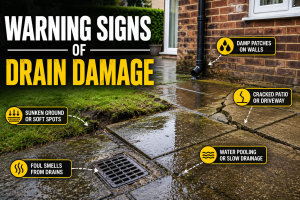
Common warning signs include:
- Lower water pressure than usual.
- Water pressure that changes during normal use.
- Damp patches on driveways, paths, lawns or garden areas.
- Water pooling when it has not rained.
- Soft, sinking or washed-out ground.
- A hissing sound near pipework or stop taps.
- An unexplained rise in water use.
- Discoloured water or sediment after pipe disturbance.
- Repeated issues with an older underground supply pipe.
One sign on its own does not always confirm a damaged supply pipe, but repeated or unexplained symptoms should be checked.
Low water pressure
Low water pressure can have several causes. It may relate to internal plumbing, local network work, stop tap settings, demand at peak times or a problem with the supply pipe.
If pressure drops suddenly or only affects one property, the supply pipe may need investigation. A leak, restriction, damaged pipe or old pipe material can all reduce flow into the building.
Where low pressure appears alongside wet ground, hissing pipework or unexplained water use, an underground pipe issue becomes more likely.
Damp ground or water pooling outside
Persistent damp ground can be one of the clearest external signs of a leaking supply pipe. This is especially true if the area stays wet during dry weather or if water appears near the known pipe route.
Leaks can show near driveways, paths, gardens, boundary areas, meter boxes or external stop taps. However, water does not always appear directly above the damaged pipe. It may travel through the ground and show at a lower point.
If damp patches keep returning, the pipe route should be checked before the surrounding ground or paving becomes more affected.
Unexplained water use
An increase in water use can point to a hidden leak, especially where household habits have not changed. If the meter continues moving when no water is being used, a leak may be present somewhere on the supply.
This does not automatically mean the external supply pipe has failed. Internal plumbing, toilets, taps and appliances should also be checked. However, if no internal cause is found, the underground pipe may need attention.
Finding the source early can help reduce waste and prevent further damage around the property.
Older water supply pipes
Older properties may still have ageing underground water supply pipes. Depending on the age and material, these pipes can become more vulnerable to leaks, corrosion, movement or restricted flow.
Some older supply pipes may also be less suitable for modern household demand. Larger homes, converted properties, extensions and business premises can all place different demands on the supply than the original pipe was designed for.
Where old pipework keeps causing problems, replacement may be more practical than repeated short-term repairs.
Leaks near driveways, paths and paved areas
Supply pipes often run below driveways, paths or hardstanding areas before entering the property. A leak below these surfaces may not be visible immediately.
Warning signs can include sinking paving, cracks, damp edges, loose blocks, moss growth, or water appearing from joints in the surface.
If the pipe sits below a paved area, careful planning matters. The aim is to locate the issue as accurately as possible and avoid unnecessary disruption where a targeted repair is possible.
When water pipe replacement may be better than repair
Repair is not always the best option. If the pipe is old, brittle, corroded, leaking in several places or too small for the property’s needs, replacement may provide a more reliable long-term solution.
Replacement may also be considered when:
- The pipe has already been repaired several times.
- The pipe material is unsuitable or deteriorating.
- Leaks keep appearing along the same run.
- Water pressure remains poor after checks.
- The property has changed use or been extended.
- The pipe route is difficult to maintain in its current condition.
A proper assessment helps decide whether a repair or new installation is the better option.
Water supply pipe responsibility
Responsibility for water supply pipework can depend on where the pipe sits and which part of the supply is affected. The Consumer Council for Water explains that customers are usually responsible for the supply pipe running from the property boundary into the home, while the water company is generally responsible for the communication pipe and mains network. CCW guidance on water pipes is a useful reference for understanding the difference between private supply pipes and water company pipework.
If the issue appears near the boundary, meter, stop tap or shared supply route, it is worth confirming responsibility before repair work starts.
How water main repairs are investigated
The first step is to understand the symptoms and likely pipe route. This may include checking visible pipework, stop taps, meters, wet ground, pressure behaviour and any known history of leaks or previous repairs.
Where the leak is not obvious, further investigation may be needed to narrow down the affected area. The goal is to identify whether the issue relates to the private supply pipe, internal plumbing, external pipe damage or another nearby water source.
Clear investigation helps avoid unnecessary excavation and supports a more accurate repair plan.
Water pipe installation for replacement supplies
Where replacement is needed, the new pipe route and installation method should suit the property. The work may involve replacing an old supply pipe, upgrading the pipe size, improving reliability or installing a new connection route where suitable.
Good installation planning considers access, depth, route, entry point, protection and reinstatement. It also helps reduce the risk of future leaks or pressure problems.
For homes and businesses, a well-planned replacement can provide a cleaner long-term solution than repairing an ageing pipe again and again.
When drainage problems may be confused with water supply leaks
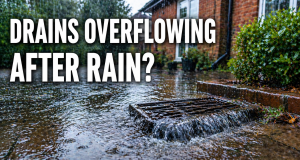
Not every wet patch outside comes from a water supply pipe. Drainage problems, surface water, blocked gullies, soakaway issues or leaking waste pipes can also leave ground wet.
This is why the symptoms need checking carefully. For example, water that appears after heavy rain may relate to surface drainage, while constant dampness during dry weather may point more towards a water supply leak.
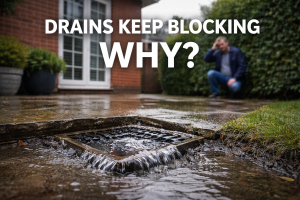
If foul smells, blocked drains or overflowing gullies are present, drain unblocking or further drainage investigation may be needed as well.
When CCTV drain surveys may help rule out drainage faults
If damp ground appears near drainage runs, it may not always be clear whether the issue is a water supply leak or a drainage fault. In some cases, a drainage inspection may help rule out damaged waste pipes, cracked drains or leaking chambers.
A camera inspection of the drains can show whether underground drainage pipework is cracked, holding water, displaced or affected by roots.
This can be useful when wet ground, smells, poor drainage and possible supply pipe issues appear together.
When emergency help may be needed
Some water supply issues need faster attention. A major leak, sudden pressure loss, water entering the property, unsafe ground movement or disruption to a business may require urgent action.
Leaks can also become more serious where water affects electrics, foundations, access routes, basements, cellars, shops, rental properties or shared buildings.
For urgent underground water or drainage problems, emergency services can help assess the situation and reduce disruption.
What property owners can do before booking
A few simple checks can help narrow down the problem before an engineer attends.
- Check whether the water meter moves when no water is being used.
- Note when pressure changes happen.
- Look for damp patches during dry weather.
- Check whether the issue affects hot and cold water.
- Listen for hissing near stop taps or pipe entries.
- Check whether neighbours have the same pressure issue.
- Avoid digging around suspected buried services.
These checks can help separate internal plumbing issues, local network problems and private supply pipe faults.
Get water pipe problems checked early
A leaking or damaged water supply pipe rarely improves on its own. Even a small leak can waste water, soften ground and become more disruptive if left unresolved.
Kingston upon Thames Drains24 can help with water main repairs, water pipe installation, underground pipe investigation, drain unblocking, CCTV drain surveys and emergency services.
If you have low pressure, damp ground or signs of an underground leak, early investigation can help decide whether repair or replacement is the right next step.
FAQs
What are common signs that water main repairs are needed?
Common signs include low water pressure, damp ground, water pooling during dry weather, hissing near pipework, unexplained water use, sinking paving and repeated problems with older supply pipes.
Who is responsible for the water supply pipe to my property?
Responsibility depends on the pipe section. Property owners are usually responsible for the private supply pipe from the boundary into the property, while the water company is generally responsible for the mains network and communication pipe.
Can low water pressure mean a leaking supply pipe?
Yes, low pressure can sometimes point to a leak, restriction or damaged supply pipe. However, internal plumbing, stop taps and local network issues should also be checked.
Is water pipe replacement better than repair?
Replacement may be better if the pipe is old, leaking in several places, too small, badly damaged or has already needed repeated repairs.
Can drainage issues look like a water supply leak?
Yes. Wet ground can also come from blocked drains, surface water problems, leaking waste pipes or soakaway issues. Investigation helps confirm the true cause.