A sinking drain cover can start with a small change. The cover may sit slightly below a driveway, rock underfoot or leave a widening crack around its edge. Although the drain below may still flow, the movement needs checking because the fault could involve the cover, its frame, the top of the chamber or the ground around it.
Do not assume the whole drain has collapsed. Equally, do not ignore a cover that feels loose or no longer sits level. A careful surface check can help you describe the problem, but a drainage engineer should assess any cover that looks unsafe.
Which part has actually moved?
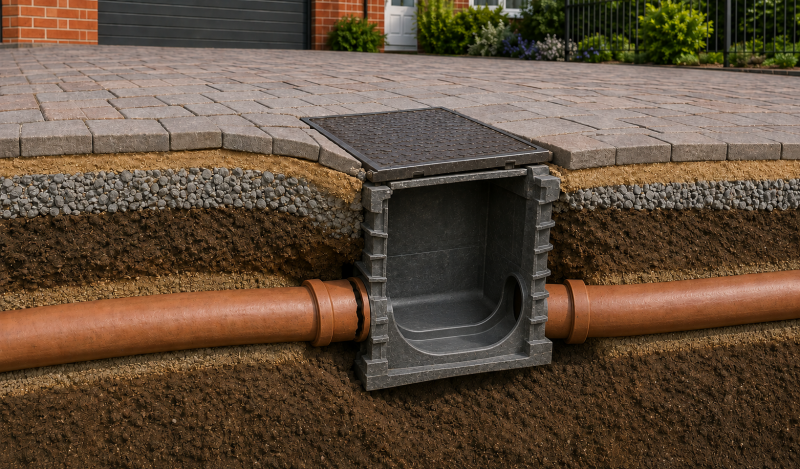
People often call the whole access point a drain cover, but it has several parts.
- The cover closes the opening.
- The frame supports the cover around its edge.
- The chamber creates an access point to the drain below.
- The surrounding surface may consist of paving, concrete, tarmac, gravel or soil.
One part can move while the others remain sound. A cover may no longer fit its frame, or the frame may lose support while the chamber stays stable. That distinction affects the repair.
Signs the drain cover or frame needs attention
Look from a safe position and avoid placing weight on the cover. Warning signs include:
- the cover rocks, rattles or tips when someone steps nearby;
- one edge sits lower than the other;
- a visible gap has opened between the cover and frame;
- the cover has cracked, bent or lost part of its edge;
- the frame has pulled away from the paving;
- mortar or concrete around the frame has broken away;
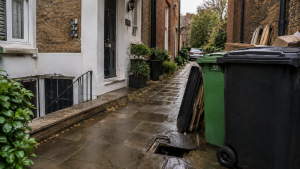
- the whole access point sits below the driveway or path;
- paving stones have started to dip towards the chamber;
- foul smells escape around the closed cover;
- water gathers over the cover after rain.
Rocking, cracking or an open gap creates a trip risk and may let soil or surface water enter the chamber.
Common reasons a drain cover starts to sink
Several faults can produce the same visible dip, so the check must go beyond the top surface.
The cover no longer fits the frame
Age, wear, impact or corrosion can damage a cover or frame. A poor fit often causes rattling before the surrounding ground starts to sink. Any replacement must suit the opening and the load it will carry; a garden-path cover does not face the same load as one on a driveway.
The frame has lost its support
The frame needs firm, even support. If the bedding below breaks down, one corner can drop while the cover remains intact. Vehicle movement, age or earlier repair work may all play a part.
The paving or driveway has settled
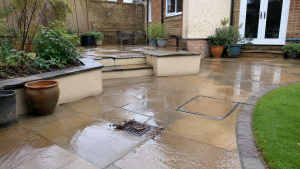
Sometimes nearby paving has moved instead of the access point. In other cases, both the frame and surface sink together. If the problem began after a patio, driveway or path was laid, our guide to drain problems after garden landscaping explains how new surfaces can change levels or affect chamber access.
The top of the chamber has become damaged
The upper chamber section supports the frame. Cracked brickwork, damaged chamber rings or a poor earlier adjustment can weaken it. This problem needs more than a new cover.
Water has washed away nearby material
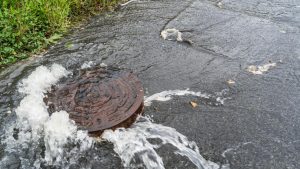
Escaping water can carry fine soil away from a chamber or pipe. A leaking connection, damaged drain, poor surface-water route or repeated overflow may leave a hollow area below paving.
Damp ground, repeat blockages, foul smells or a growing hollow beside the chamber make a deeper drainage check sensible.
Cover fault, chamber fault or ground movement?
| What you can see | Possible cause | Sensible next check |
|---|---|---|
| Cover rattles but frame looks firm | Worn or poorly fitting cover | Check cover and frame condition |
| One frame corner sits low | Failed bedding or local movement | Check support below the frame |
| Whole chamber area has sunk | Ground settlement or chamber movement | Check chamber and nearby ground |
| Paving slopes into the cover | Surface levels or lost support | Check paving edge and chamber surround |
| Cracks, smells or repeat blockages appear too | Possible chamber or drain fault | Check flow, chamber and pipe condition |
| Water gathers only after rain | Low surface level or poor runoff | Check surface falls and rainwater route |
Why safe access still matters
Inspection chambers let engineers reach the drain for clearing, testing and camera work. A repair should keep that access usable.
Approved Document H on GOV.UK covers drainage, manholes and inspection chambers, including access and protection considerations for drainage work in England.
If the drain blocks later, engineers need to find and open the correct chamber without first breaking through paving.
Safe checks you can make from the surface
Keep children, pets and vehicles away from a cover that looks weak. Then photograph it from several angles, including the nearby surface.
You can also note:
- when you first saw the movement;
- whether it has become worse;
- whether vehicles cross the cover;
- whether paving or landscaping work happened nearby;
- whether water pools there after rain;
- whether drains smell, gurgle or block;
- and whether the chamber sits on private land or in a public path or road.
Do not test the cover by stepping on it. Never lift a heavy or damaged cover, reach into a chamber or pack loose material below the frame. If an opening remains, keep well back and arrange urgent help.
How an engineer checks a sinking drain cover
The engineer first checks the stability of the cover, frame, surface and visible chamber top. The check may establish whether:
- the cover matches the frame;
- the frame has firm support;
- the chamber walls or rings have cracked;
- loose material has fallen into the chamber;
- water enters around the frame;
- the drain flows normally;
- or signs point to a damaged connection or pipe.
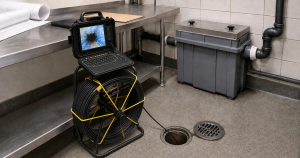
A CCTV drain survey does not form part of every cover repair. However, it can help when repeat blockages, escaping water or wider sinking suggest a problem below.
What might the repair involve?
The repair should match the failed part. It may involve:
- fitting a suitable cover and frame;
- resetting a sound frame on firm support;
- rebuilding the damaged top of a chamber;
- making good the surface around the access point;
- improving the level so rainwater does not collect there;
- or repairing a drain fault that has affected the surrounding ground.
Filling a surface gap may hide movement without restoring support. Replacing the cover alone will not help if the chamber top has cracked.
Kingston upon Thames Drains24 provides professional drain repairs in Kingston upon Thames and can check whether the problem sits in the cover, frame, chamber or drain below.
When does the problem need quick attention?
Arrange a prompt check when the cover rocks, leaves a gap or sits where people or vehicles pass. Act urgently if:
- the cover has broken through;
- part of the chamber opening has become exposed;
- the surrounding surface drops suddenly;
- wastewater rises inside the chamber;
- strong foul smells appear with wet ground;
- or the area continues to sink.
Keep away from any opening. If the cover sits in a public road or footway, report its exact position to the responsible highway, council or utility body.
Get a loose or sinking cover checked in Kingston
A sinking drain cover does not always mean the pipe has collapsed. The fault may sit in the cover, frame, chamber top or surrounding surface, but movement can leave the access point unsafe.
If a cover rocks, drops or cracks around your Kingston upon Thames property, contact Kingston upon Thames Drains24. A proper check can identify which part has failed and guide the right repair without unnecessary work.
Frequently Asked Questions
Why has my drain cover started sinking?
The cover may sink because its frame has lost support, the chamber top has become damaged or the surrounding ground has settled. Escaping water can also wash material away. An on-site check should confirm which part has moved.
Is a rocking drain cover dangerous?
It can create a trip risk and may tip or leave a gap over the chamber. Keep people and vehicles away, do not test it by stepping on it and arrange a check.
Does a sunken drain cover mean the drain has collapsed?
Not necessarily. The pipe may still work normally while the cover frame or chamber top needs repair. Repeat blockages, foul smells, wet ground or wider settlement can point to a deeper fault.
Can I lift a damaged inspection chamber cover myself?
Avoid lifting a heavy, cracked or unstable cover. Never enter a chamber. Photograph the area from a safe position and let a suitable drainage professional assess it.
Can a drain cover be raised when a driveway is resurfaced?
Often, a sound chamber can accept a properly supported frame at the finished surface level. However, the installer must check the chamber, choose a suitable cover and keep access clear rather than paving over it.